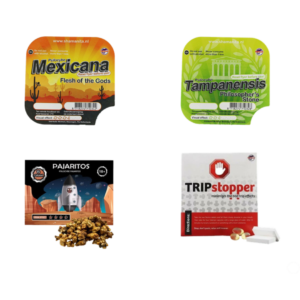

Psychedelic mushrooms are experiencing a huge wave of interest – from therapeutic research to mindful, intentional personal use – but that doesn’t mean they are risk-free. For curious beginners, choosing the right type of mushroom, starting gently, and understanding safety basics can make the difference between a meaningful experience and an overwhelming one.
In this guide, we’ll walk through the most commonly recommended beginner-friendly psychedelic mushroom strains, what “safe” really means in this context, and the essential harm-reduction practices every newcomer should know. Throughout, we focus on strains of Psilocybe cubensis, the most widely cultivated psychedelic mushroom species, because they are relatively consistent and better studied than many wild species.
What “Safe” Really Means With Psychedelic Mushroom Strains
Calling any psychedelic mushroom “safe” can be misleading. A more accurate term is “safer for beginners under careful, informed, and legal use.”
Several points are consistently emphasized in scientific and public health information:
- Psilocybin itself has relatively low physical toxicity, but psychological and behavioral risks can be significant, especially at higher doses or in people with underlying vulnerabilities.
- Most modern, cultivated “strains” are all Psilocybe cubensis, and the main difference between them is usually potency, not a completely different “type of trip.”
- Even within one strain, potency can vary several-fold depending on genetics and growing conditions, so effects are never perfectly predictable.
- The biggest safety factors are:
- Dose
- Set (your mindset, expectations, mental health)
- Setting (environment, support, trip-sitter)
- Product quality and identification (avoiding toxic look-alikes or adulterants)
So in this article, when we talk about beginner-friendly or safer strains, we mean:
- Typically moderate potency (not the strongest)
- Widely used and discussed, with a large base of anecdotal experience
- Cultivated, lab-testable species (P. cubensis, not wild-picked unknowns)
No strain removes the need for careful harm reduction and informed consent.
Why Most Beginners Start With Psilocybe cubensis
More than 50 species of mushrooms contain psilocybin or related compounds, including genera such as Psilocybe, Panaeolus and Copelandia, but they can be very hard to distinguish from non-psychoactive or poisonous species in the wild.
Public health agencies stress that misidentification is one of the most serious risks of magic mushrooms, with toxic look-alikes capable of causing liver failure, kidney damage, and death.
By contrast, Psilocybe cubensis:
- Is the most widely cultivated psychedelic species worldwide.
- Has been the focus of much of modern psilocybin research and cultivation work.
- Is relatively easy to grow under controlled conditions and produces large fruiting bodies.
- Shows a psilocybin content that, while variable, is within a moderate and familiar range for many users and researchers.
Because of this, most “strains” you see named online (Golden Teacher, B+, etc.) are variants of P. cubensis, and they are generally considered a more predictable and controllable choice for beginners than hunting unknown wild species.
Key Beginners’ Principle: Potency Over Branding
Modern psychedelic culture often assigns personalities to strains: one is “spiritual,” another “visual,” another “body-heavy.” Growers and educators emphasize that, while users sometimes report differences, the biggest consistent variable is potency, not a magic personality trait.
Lab analysis of common strains like Golden Teacher shows that even a single strain can range from roughly 4 to 12 mg of active compounds (psilocybin + psilocin) per gram of dried mushroom, a threefold difference. Other cubensis strains can reach 24–25 mg per gram or more in some tests.
What this means for beginners:
- No label guarantees a specific strength. Two batches of the “same” strain can feel very different.
- Lab testing is the only reliable way to know potency per gram.
- For safety, experts recommend starting with very low doses and increasing only gradually, especially with unfamiliar products.
With that in mind, let’s look at commonly cited beginner-friendly cubensis strains, along with why they’re often chosen.
Beginner-Friendly Psilocybin Mushroom Strains (All Psilocybe cubensis)

1. Golden Teacher
Why it’s popular
- One of the most widely known and discussed cubensis strains, with decades of use in underground and therapeutic-adjacent communities.
- Frequently described by users as balanced, introspective, and forgiving, although these perceptions are subjective and not scientifically standardized.
Potency & profile
- Typically considered moderate potency, though lab tests show a wide range of ~4–12 mg/g of active compounds.
- Because of its name recognition and long history, many people view Golden Teacher as a “classic starter strain” – but experts caution that its potency and growth behavior can make it less efficient to cultivate at scale, which may affect availability.
Beginner takeaways
- Pros: Familiar, widely discussed, moderate typical strength.
- Cautions: Still fully psychedelic; high doses can be intense or overwhelming, especially for people with anxiety or underlying mental health conditions.
2. B+
Why it’s popular
- Frequently highlighted in cultivation communities for its resilience and consistent growth under a range of conditions.
- Often positioned – informally – as friendly to beginners, both for growers and first-time users, due to its reputation for stability.
Potency & profile
- Academic reviews note B+ among cubensis strains with relatively high, but not extreme, psilocybin content.
- User reports generally describe B+ as somewhere in the middle: stronger than the mildest cubensis, but not in the same league as ultra-potent varieties like Jedi mind fuck.
Beginner takeaways
- Pros: Widespread, relatively consistent, familiar to growers.
- Cautions: Potency can still be substantial; with no lab test, beginners should treat B+ as potentially strong and dose conservatively.
3. Ecuador (Ecuadorian)
Why it’s popular
- A long-standing cubensis variety reportedly originating from highland regions of Ecuador, widely distributed in spore and grower communities.
- Often described anecdotally as clear, balanced, and less overwhelming at modest doses compared to stronger strains.
Potency & profile
- Scientific literature groups Ecuador with other typical cubensis strains, without evidence of ultra-high psilocybin content.
- In underground communities, Ecuador is frequently recommended as a solid “middle-of-the-road” strain for new users who are approaching psychedelic work intentionally and cautiously.
Beginner takeaways
- Pros: Long history of use, generally moderate potency profile, perceived as “clean” by many users.
- Cautions: Still fully capable of producing challenging psychological experiences, especially at higher doses or in unsafe environments.
4. Thai (Thai Cubensis)
Why it’s popular
- Derived from Southeast Asian Psilocybe cubensis lineages, sometimes associated with traditional use in regional communities.
- Frequently chosen by users looking for more energy and visuals than the absolute mildest strains, but without jumping straight to the strongest options.
Potency & profile
- Reviews of cubensis strains list Thai Cubensis among variants with relatively high psilocybin content, though usually below top-tier powerhouses like Penis Envy.
- Beginners who turn to Thai strains often do so after reading that it can be stimulating and vivid, which may be appealing or overwhelming depending on mindset.
Beginner takeaways
- Pros: Widely available; strong but typically not at the very top end of cubensis potency.
- Cautions: Because of the potential for more intense sensory effects, some true first-timers may prefer starting with Golden Teacher, B+, or Ecuador and only later exploring Thai varieties.
5. Mazatapec (Mazatec)
Why it’s popular
- Associated (by name) with the Mazatec region of Mexico, where traditional psilocybin mushroom use has a long cultural history.
- Underground communities often describe Mazatapec as gentle, spiritual, and introspective at low to moderate doses.
Potency & profile
- Limited formal lab data is available; academically, Mazatapec is treated as a typical P. cubensis strain rather than an outlier in potency.
- User reports commonly categorize it as moderate potency, with a gradual onset and less edgy character than some more stimulating strains.
Beginner takeaways
- Pros: Culturally respected lineage; often seen as suitable for slow, reflective sessions when used intentionally.
- Cautions: Like all cubensis, can become very intense at higher doses or in poor settings. Not a substitute for attention to mental health screening and preparation.
6. “Milder” Cubensis vs. High-Potency Strains to Approach Later
While no official ranking exists, many experienced users and educators advise beginners to avoid ultra-potent strains such as:
- Penis Envy and its numerous variants (Albino Penis Envy, Tidal Wave, Shakti Albino Malabar etc.), which are consistently noted for exceptional potency.
- Novel or heavily hybridized strains (e.g., African Transkei , Enigma, Jack Frost) that may combine high potency with unusual growth characteristics, making dosing and expectations harder to manage.
Academic reviews of cubensis highlight Penis Envy and several newer strains as outliers with significantly higher psilocybin content, sometimes double or more that of common baseline strains.
For someone new to psychedelics, this means:
- A dose that might be moderate with Golden Teacher could become overwhelming or destabilizing with Penis Envy, even if the weight in grams is the same.
- Without lab testing and experience, it is much harder to gauge a careful, beginner-appropriate dose of these more powerful strains.
Practical safety guideline: most harm-reduction organizations and educators recommend that new users start with moderate-potency cubensis (like Golden Teacher, B+, Ecuador, Mazatapec) and focus heavily on set, setting, and support, rather than chasing “strongest ever” strains.
Safety First: Core Harm-Reduction Principles for First-Time Users
Regardless of strain, several safety recommendations appear consistently across public health resources, psychedelic research, and harm-reduction groups.
1. Never Eat Unidentified Wild Mushrooms
- Many toxic mushrooms closely resemble psilocybin-containing species, and casual visual inspection is not reliable.
- Poisonous mushrooms can cause severe gastrointestinal distress, liver and kidney failure, and death, and cooking or drying does not destroy these toxins.
- Agencies explicitly advise: do not consume wild mushrooms unless identified by a certified expert; in practice, beginners should avoid foraging entirely.
2. Understand Health Risks and Contraindications
Public health organizations highlight several key risks:
- Psychological distress: intense fear, anxiety, paranoia, panic, disorientation, or psychosis, particularly at higher doses or in unsafe settings.
- Aggravation of mental health conditions: people with personal or family histories of psychosis, bipolar disorder, or severe depression may face elevated risk of prolonged or worsening symptoms.
- Physical effects: increased heart rate and blood pressure, nausea, vomiting, dizziness, loss of coordination, and muscle twitches, which can be dangerous for those with cardiac or certain medical conditions.
- Accidents and injuries: impaired judgment and distorted perception can lead to falls, traffic accidents, risky behavior, or self-harm. Many documented deaths related to magic mushrooms are due to trauma, not toxicity.
If you have heart disease, epilepsy, a major psychiatric diagnosis, or are taking serotonin-affecting medications (like many antidepressants), experts advise not to use psilocybin outside of a clinical setting with medical oversight.
3. Set, Setting, and Sober Support
Long before modern research, indigenous and psychedelic communities emphasized preparation, intention, and ritual. Contemporary harm-reduction and clinical trials echo the same core ideas:
- Set (mindset):
- Avoid use when you are in a period of acute distress, instability, or high stress.
- Clarify your intentions (curiosity, healing, insight) and expectations ahead of time.
- Setting (environment):
- Choose a calm, familiar, and safe indoor space, away from traffic, heights, and sharp edges.
- Have access to water, a comfortable place to lie down, calming music, and low lighting.
- Sitter (support):
- Research consistently requires a sober, trained guide or sitter for high-dose psilocybin sessions.
- For any unsupervised, non-medical use, harm-reduction groups strongly recommend at least one trusted, sober friend who understands how to respond to anxiety or confusion and can call for help if needed.
4. Start Low, Go Slow
Because strain potency and individual sensitivity vary, responsible organizations stress cautious dosing, particularly for new users:
- Begin with a low dose, wait for full effects, and do not re-dose impulsively; psilocybin experiences can last 4–6 hours or longer.
- Avoid combining with alcohol, stimulants (like methamphetamine or MDMA), or other substances, which can increase the risk of panic, cardiovascular stress, and confusing or dangerous behavior.
Although underground communities often share gram-based guidelines, clinical studies generally avoid “grams of mushroom” and instead use precise milligram doses of pure psilocybin, acknowledging that mushroom potency is too variable for strict equivalence.
5. Trip-Planning and Aftercare
Safer-tripping resources suggest thinking through both the experience and the integration period:
- Schedule the experience on a day without work or external obligations, and allow time the next day for rest and reflection.
- Prepare non-judgmental, supportive people you can talk to afterward if the experience brings up difficult emotions or memories.
- If you experience persistent distress, paranoia, panic, or mood changes for days or weeks afterwards, seek help from a mental health professional and be honest about what you took.
Legal Status: Why Beginners Must Check Local Laws
While some jurisdictions have moved toward decriminalization or tightly controlled medical use of psilocybin, national health authorities in countries like Canada and many others still classify psilocybin as a controlled, illegal substance outside of approved research or special access programs.
Key points from public agencies:
- Possession, sale, and production of magic mushrooms remain criminal offences in many countries.
- Products sold on illicit markets may be mislabelled, adulterated, or contaminated, adding further risk beyond the drug itself.
- Even in regions with decriminalization, that does not equal full legalization or product regulation, and buyers may have no guarantees around potency or purity.
Anyone considering use should:
- Research their country, state, and local laws carefully.
- Understand that ordering or possessing psilocybin products, including spores or grow kits in some jurisdictions, may carry significant legal consequences.
For readers in jurisdictions where use is prohibited, staying on the side of the law and focusing on education, mental health support, and legal wellness practices is the safest path.
Choosing a Beginner Strain Thoughtfully
- Common “first-wave” options (moderate typical potency):
- Golden Teacher
- B+
- Ecuador
- Mazatapec
- Second-wave options for those with some experience:
- Thai Cubensis and other slightly stronger, more vivid strains
- Advanced or cautious-use strains (often higher potency):
- Penis Envy and its many variants
- Newer, highly potent hybrids (e.g., Enigma, Jack Frost)
Across all of these, safe and meaningful psychedelic work depends far more on preparation, respect, and responsible choices than on a name printed on a bag.
If you’re seeking additional educational resources, many readers explore structured information from reputable organizations and legal providers; platforms such as magicshroomstore.com.de can be a starting point to learn more about strains, products, microdosing, macrodosing , magic truffles vs mushrooms comparison and the broader psychedelic landscape in a legally compliant way.
Moving Forward: Educated, Respectful, and Cautious Use
Psychedelic mushrooms sit at the crossroads of ancient tradition, cutting-edge psychiatric research, and modern wellness culture. For beginners, the safest path is slow, informed, and humble:
- Recognize that no strain is completely safe, and “beginner-friendly” only means “somewhat more forgiving” under the right conditions.
- Focus first on mental and physical health screening, education, and preparation, not on chasing the most potent strain.
- Approach common cubensis strains like Golden Teacher, B+, Ecuador, and Mazatapec with respect, conservative expectations, and robust harm-reduction practices.
- Stay current on local laws and prioritize your long-term well-being over any single experience.
If you choose to explore this space where it is legal, doing so intentionally, slowly, and with trustworthy information can help transform a risky experiment into a safer, more meaningful journey. For deeper strain education and product overviews aligned with these principles, you can explore resources provided by reputable, responsible platforms such as magicshroomstore